
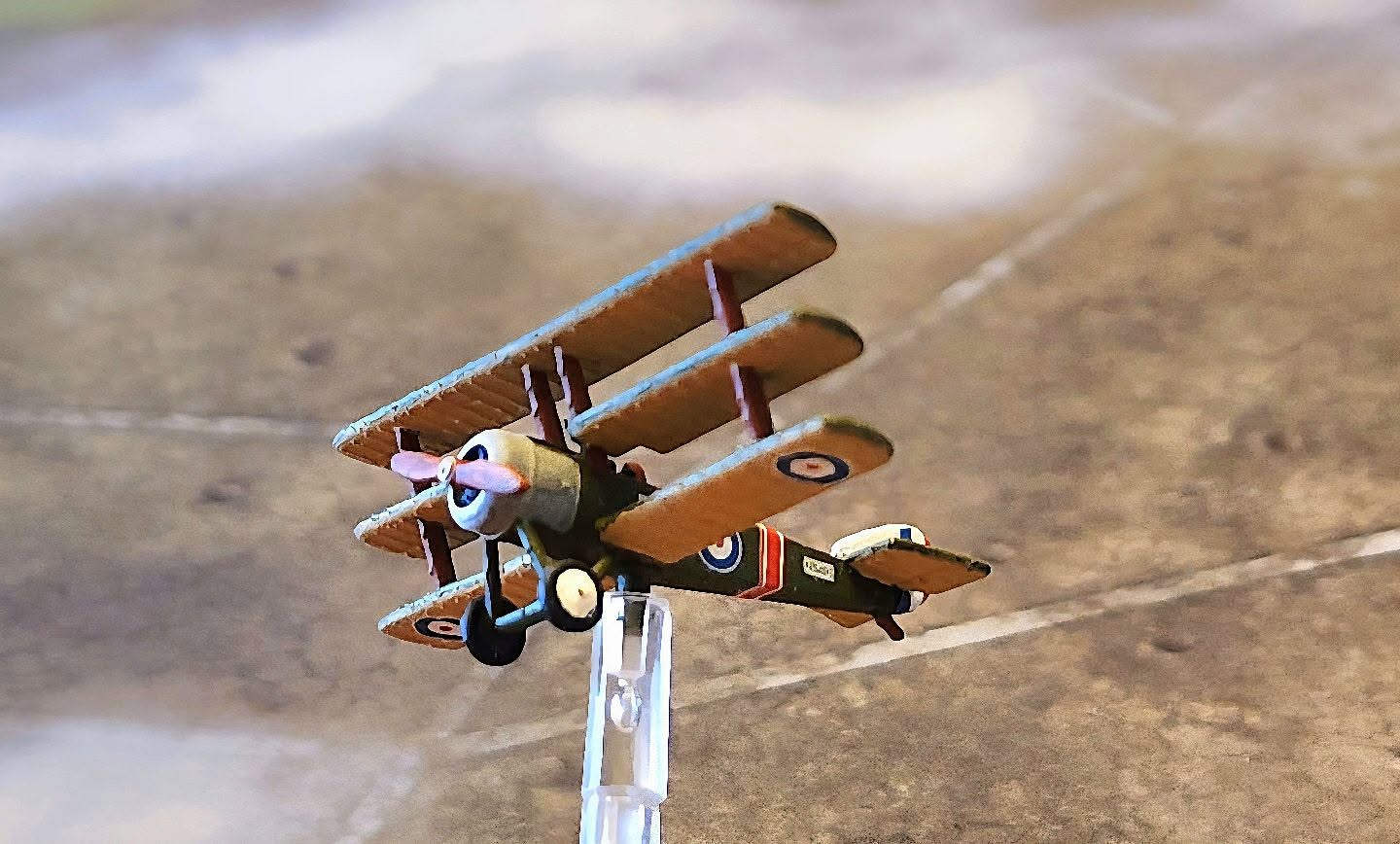
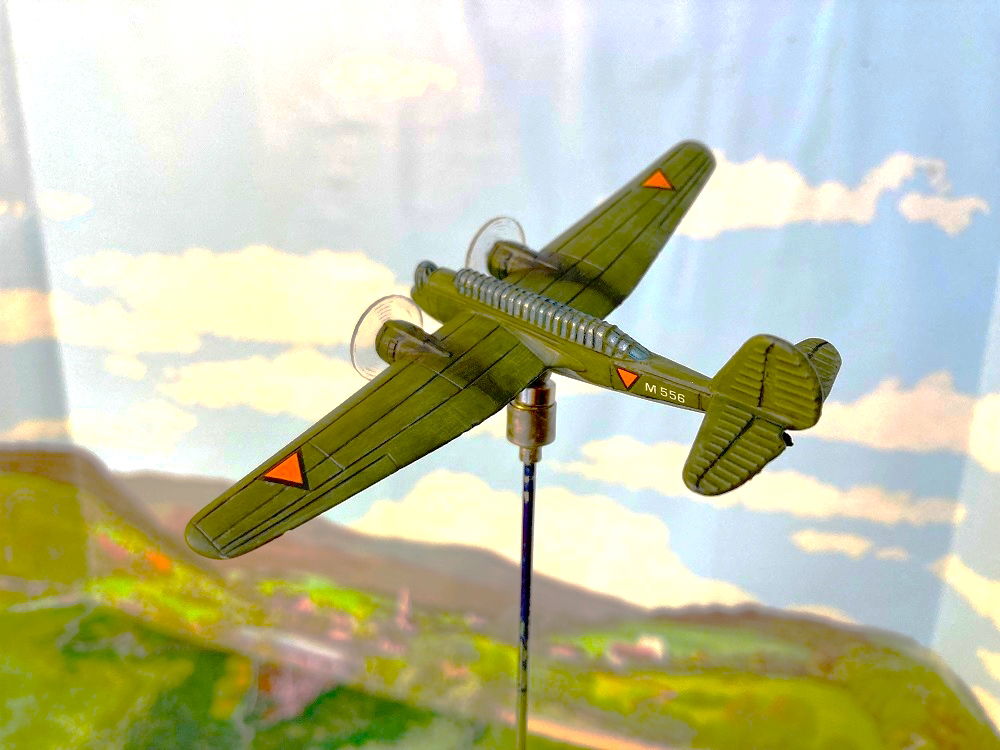
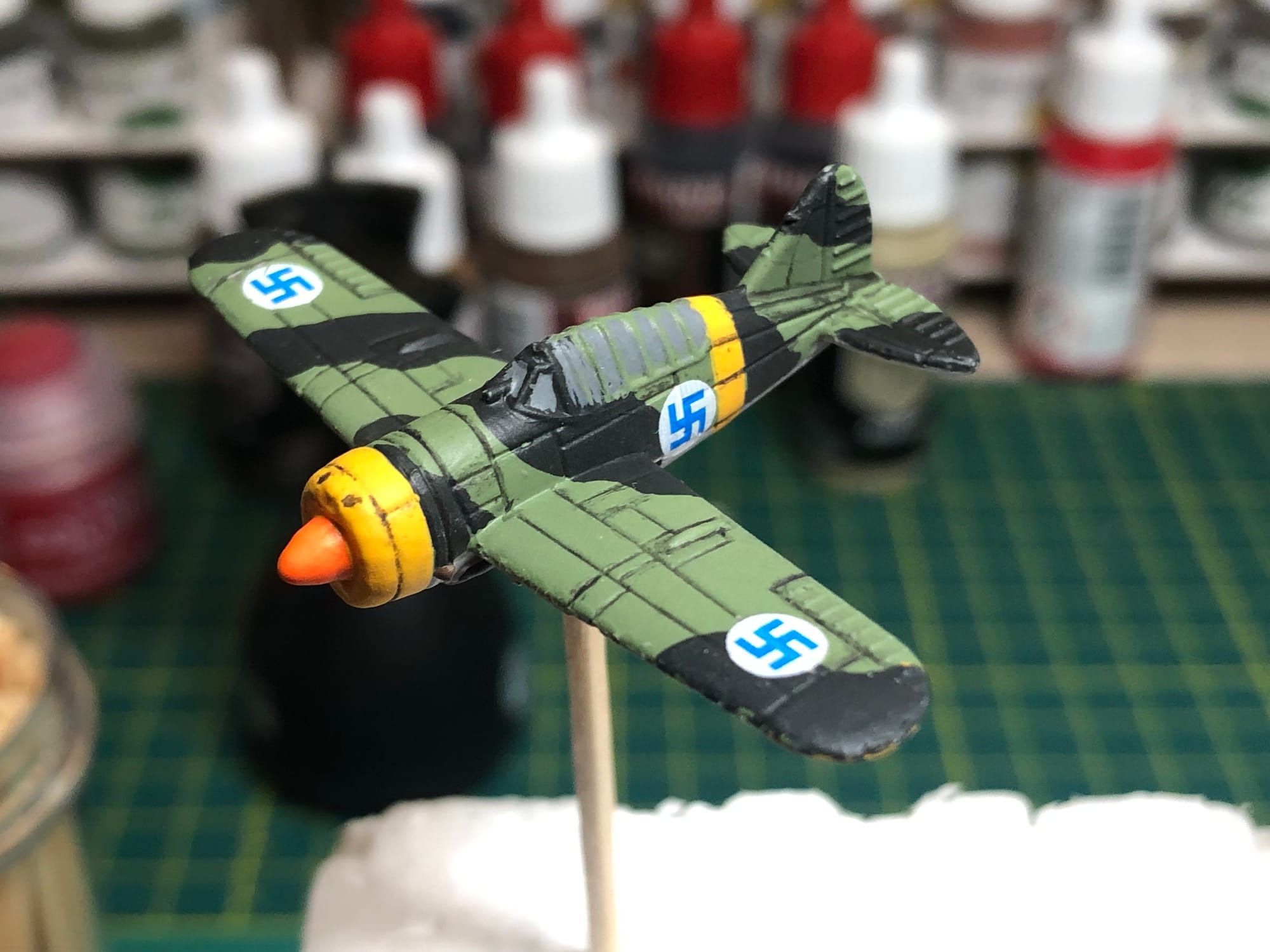
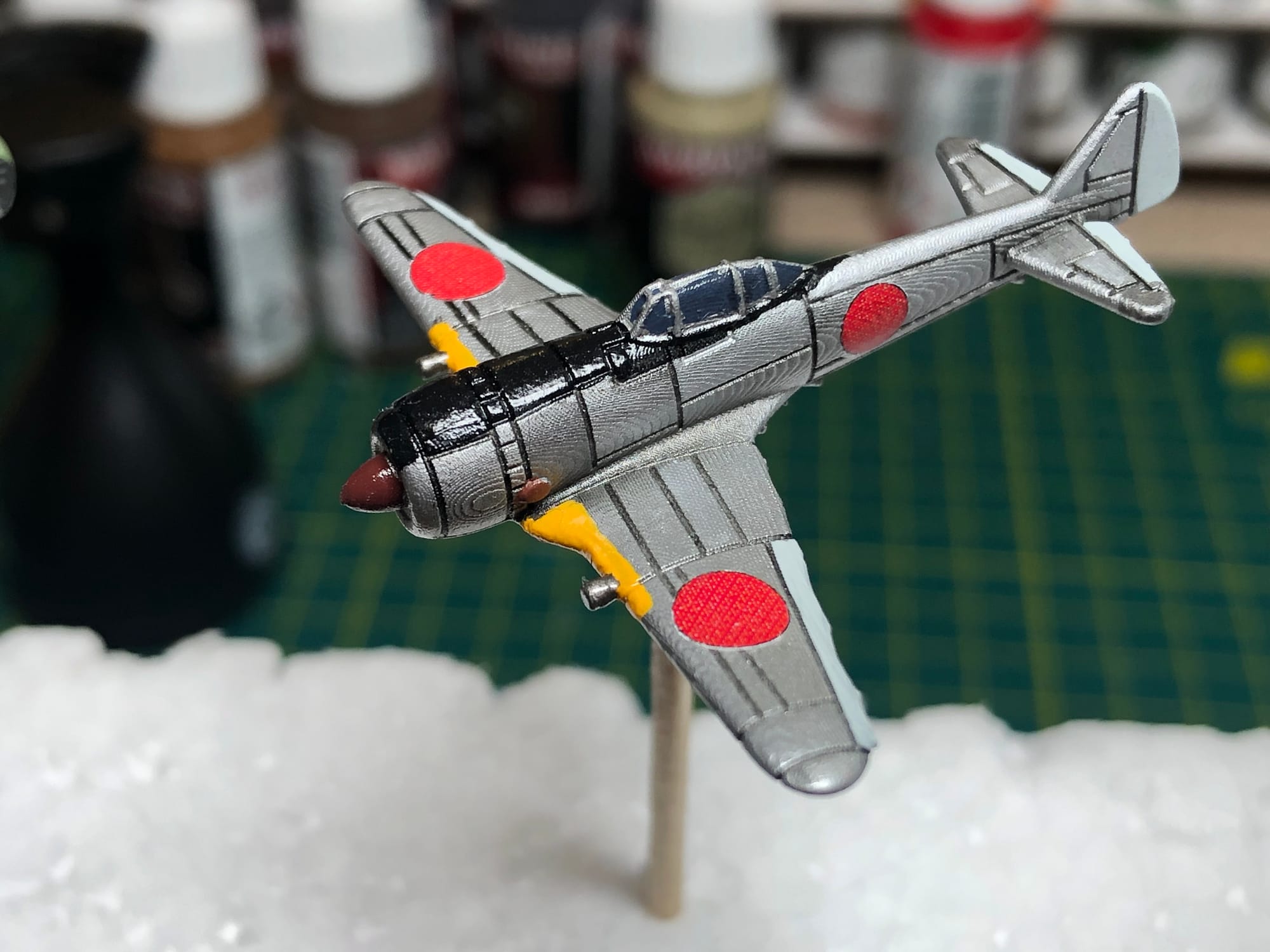
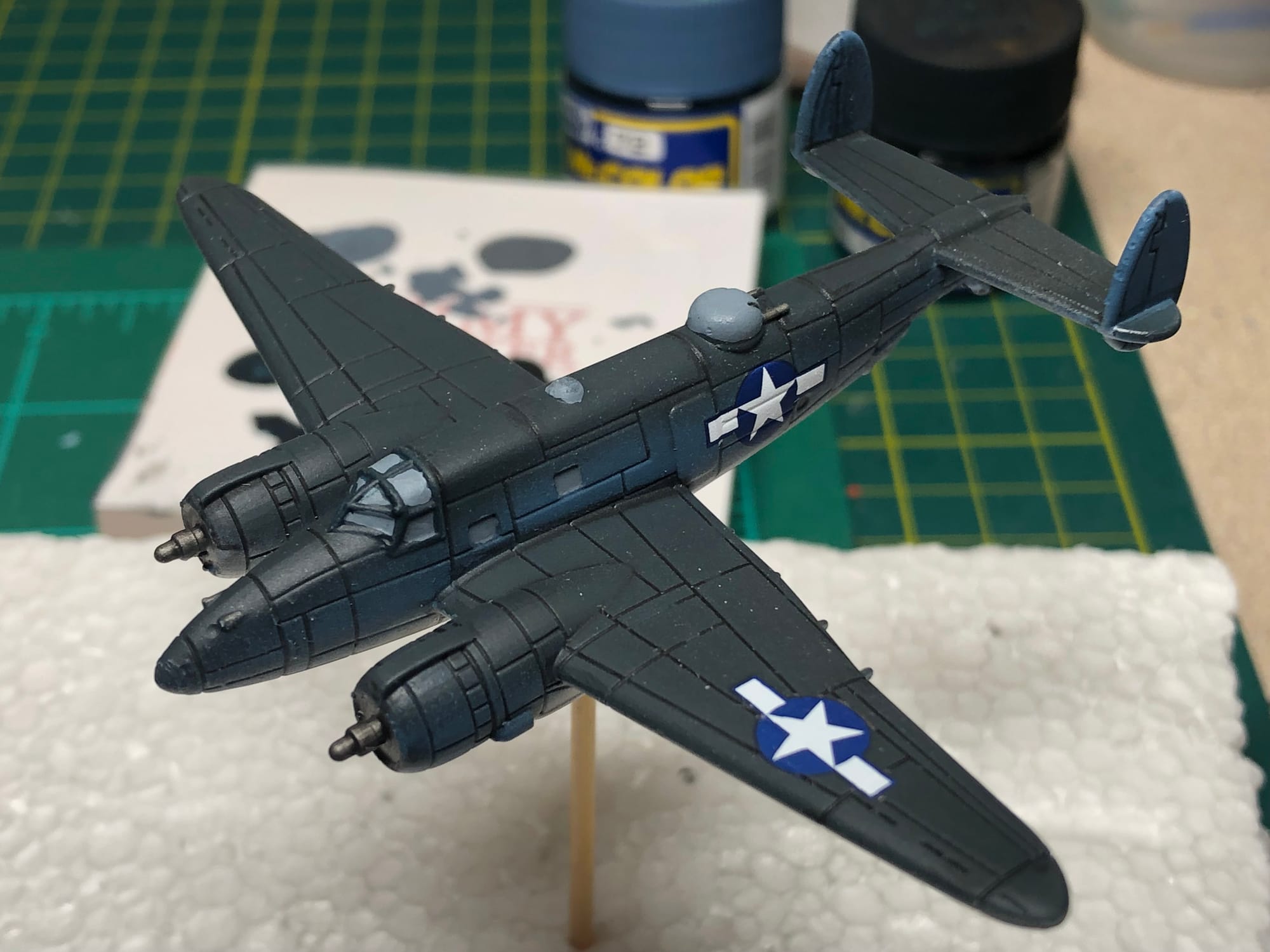
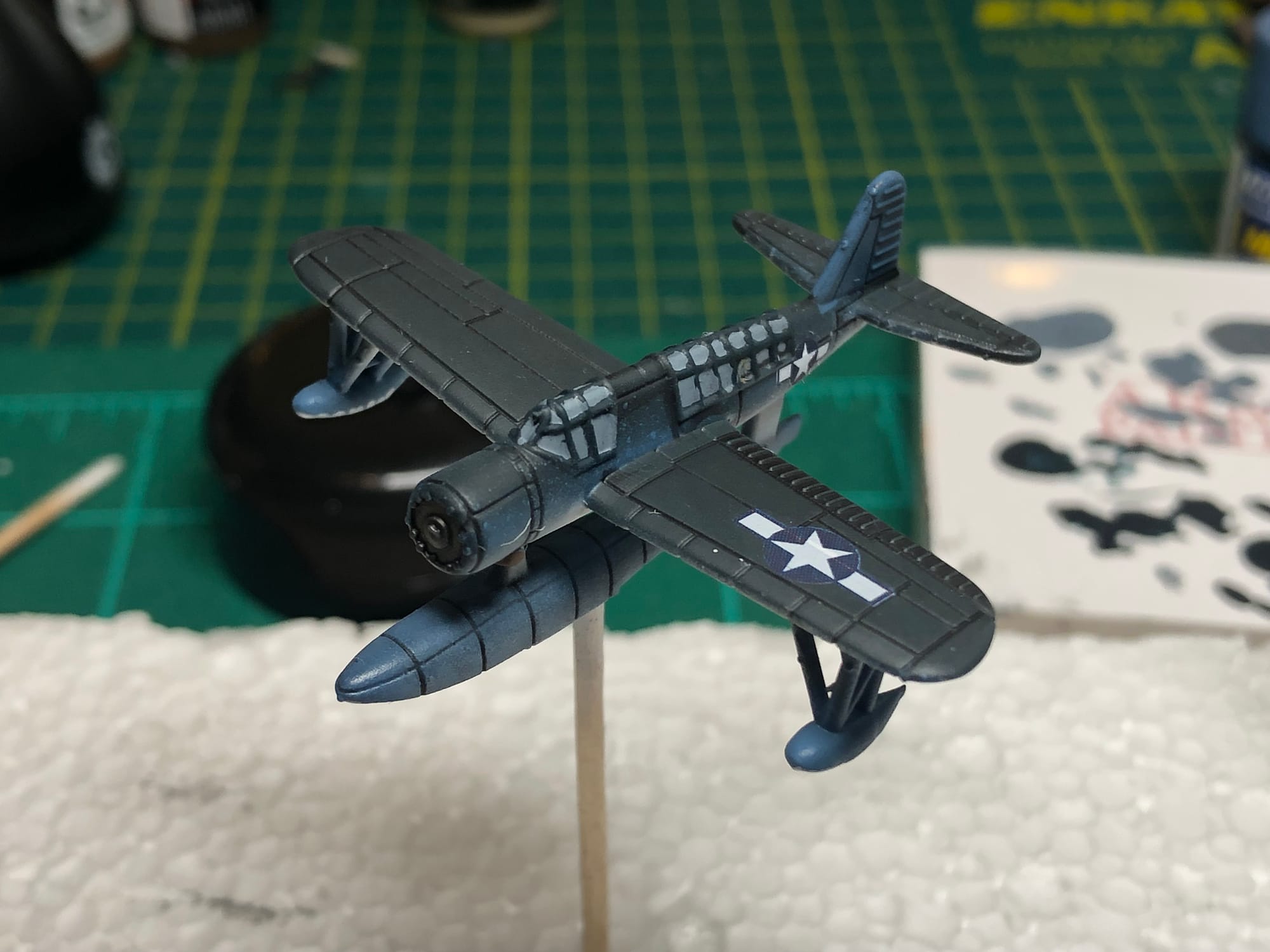
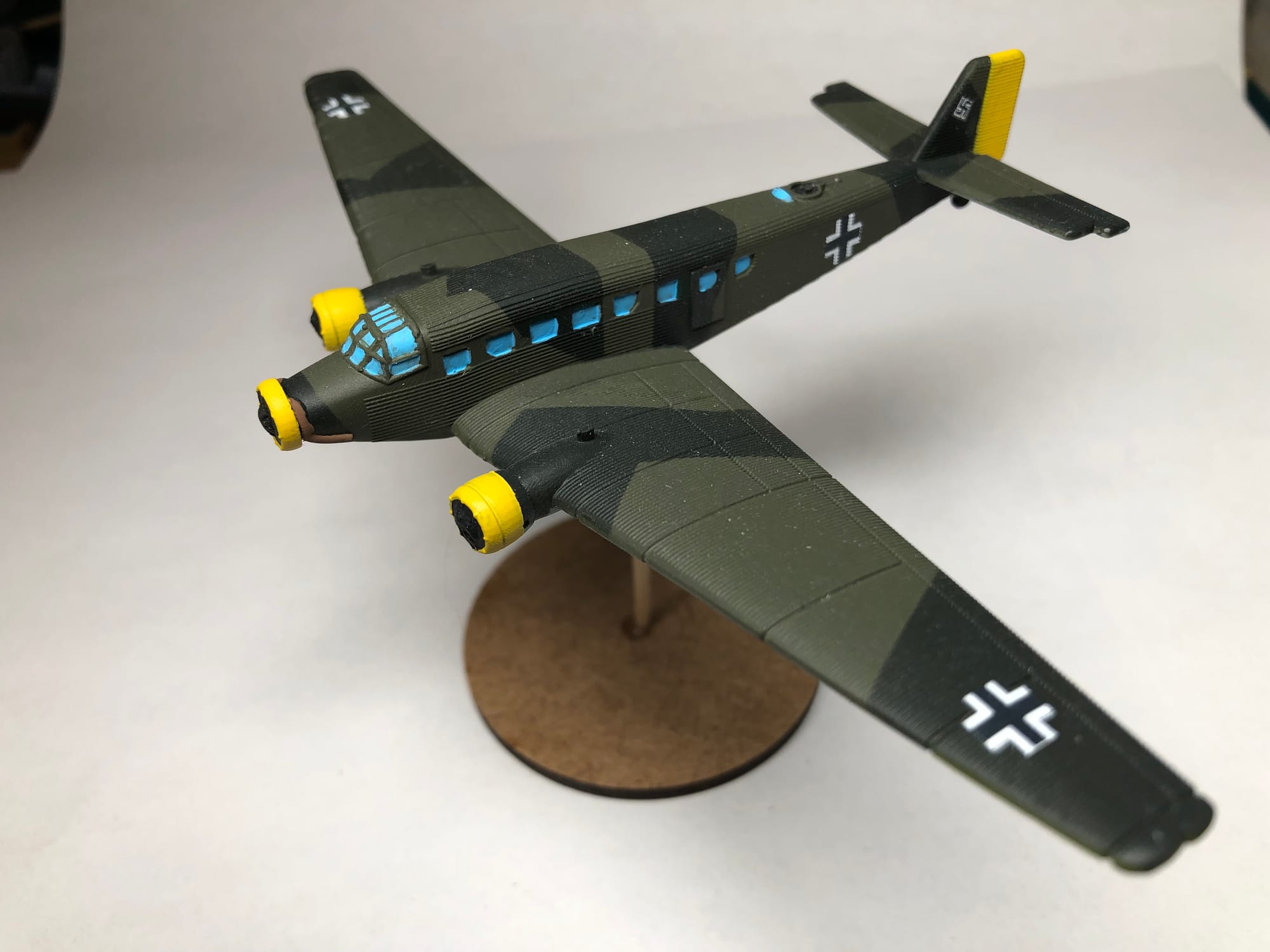
Tabletop Flights is proud to partner with Kevin of Miscellaneous Miniatures, a talented artist who brings history to life through precision decal design and expert miniature painting. Kevin produces high-quality water-slide decals covering a vast range of aircraft, from World War I biplanes to World War II fighters, Cold War jets, and many more. His attention to historical accuracy and fine detail ensures that every model carries authentic squadron markings and period-correct insignia. In addition to his decal work, Kevin also offers custom painting commissions, transforming miniatures into beautifully finished gaming pieces with expertly applied camouflage, insignia, and weathering. Whether you’re finishing a new model or enhancing a favorite aircraft from your collection, Miscellaneous Miniatures adds the perfect final touch of realism and artistry.
The Orderly Room
Desk of the Duty Officer
At the Duty Officer’s Desk, you’ll find detailed event briefings, downloadable mission PDFs, lists of aircraft needed for upcoming games, and discount codes. You’ll also find a link to Tales from Thursdays Past, where you can revisit earlier adventures.
Read MoreDesk of the Quartermaster
Questions about your models or an order? The aerodrome staff is here to help. Select the appropriate staff member below for more information.
Read More
FALL IN 2026 CONVENTION SALE - 15% OFF!
Celebrate Fall In with 15% off everything at Tabletop Flights, now through November 11, 2026! Discount Code: ( 512241AR ) I'll be at Fall In Friday through Sunday, hosting games and taking catalog orders. Join one of my games for a chance to earn special rewards for outstanding gameplay! Convention game rewards CAN be combined with the 15% discount on catalog orders placed at Fall In! Offer cannot be combined with other discounts or gift certificates, except qualifying convention game rewards. www.TabletopFlights.com See you at Fall In, and Happy Flying! Mike - Tabletop Flights
Read More
The Parade Grounds Are Open!
A new area has opened at the Tabletop Flights aerodrome! The Parade Grounds will spotlight aircraft, manufacturers, and their history, with a new selection taking center stage on a rotating basis. Even better, all aircraft featured on The Parade Grounds will be 20% off while they are on parade. First onto the field is the Airco family, featuring aircraft from the DH.2 through the DH.9A and a wide selection of available models and variants. Visit The Parade Grounds to see what’s currently on parade, or follow the link to our Facebook page for the full announcement.
Read More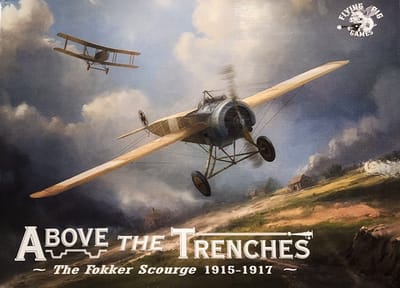
FIRST LOOK: ABOVE THE TRENCHES - LIVE WITH DESIGNER BOB TKACH!
Thursday, September 3rd at 7:00 PM Eastern Join us on the Tabletop Flights (https://www.youtube.com/watch?v=CVcwk2p8_iI) YouTube Channel for a special LIVE first look at Above The Trenches: The Fokker Scourge 1915–1917, the upcoming World War I aerial warfare game from Flying Pig Games. We'll be opening one of only five prototype copies of the game, and designer Bob Tkach will be joining us live! After a quick unboxing, Bob will walk us through the setup and teach us how to play as we put the game on the table for a turn or two. We'll finish the roughly one-hour session with some questions and my first impressions. Can't make it live? The complete stream will remain on YouTube for later viewing. Read the full announcement on our Facebook page.
Read More
Russian Aces: Holding Short of the Runway
Russian Aces Project Update The Russian Aces Campaign Project continues to move closer to completion, but we have made the decision to push back the planned crowdfunding launch. Additional editorial work, the unexpectedly time-consuming process of reformatting the books, and the completion of the cover artwork are all milestones that still need to be crossed. From the beginning, the goal has been to launch crowdfunding only when the project is complete, or very nearly complete. Rather than launch now and risk lengthy delays afterward, we are going to give the project the time it needs to be finished properly. We are closer to the finish line, we're just not quite there yet! Read the full Russian Aces Project Update on our Facebook page.
Read MoreUpcoming Events
The Parade Grounds
All Airco aircraft currently available from Tabletop Flights are 20% off while the Airco family occupies The Parade Grounds.
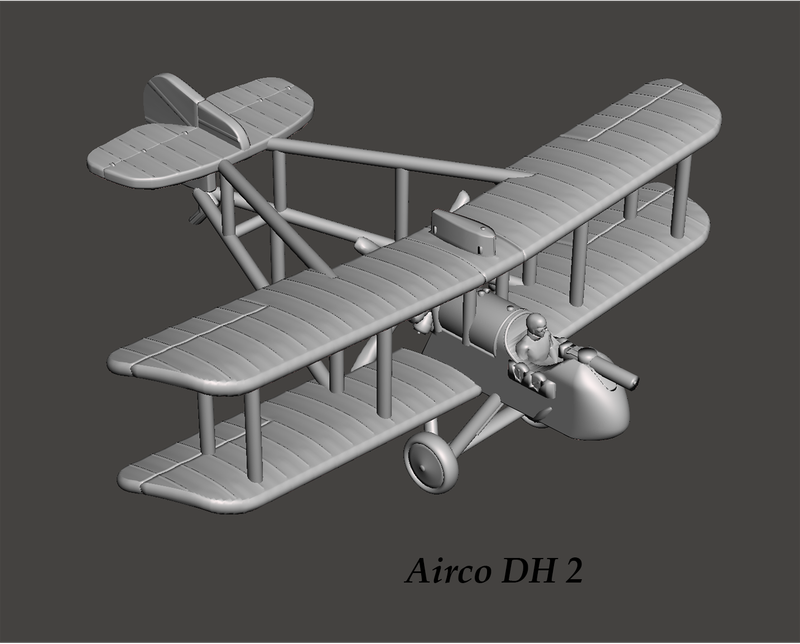
Airco DH.2
Introduced in 1916, the Airco DH.2 was a single-seat pusher fighter designed by Geoffrey de Havilland. With its engine and propeller mounted behind the pilot, the DH.2 allowed an unobstructed forward-firing machine gun before reliable synchronization gear was available to the British. It played an important role in helping the Royal Flying Corps challenge the German Fokker monoplanes and bring the period known as the “Fokker Scourge” to an end.
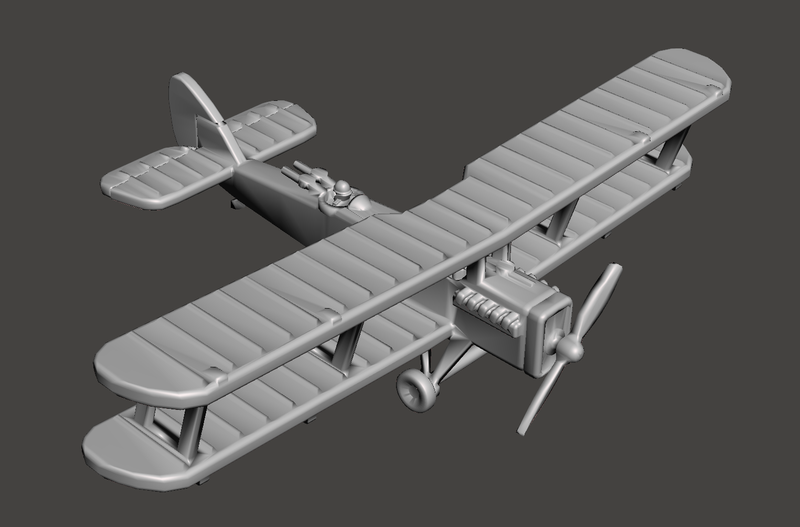
Airco DH.4
Introduced in 1917, the Airco DH.4 was a fast and versatile two-seat aircraft designed by Geoffrey de Havilland. Used primarily for daylight bombing and reconnaissance, its speed and performance allowed it to operate deep behind enemy lines while still being capable of defending itself against fighters. The DH.4 served extensively with British and American forces and was produced with several different engines and configurations, becoming one of the most successful and widely used Allied aircraft designs of the First World War.
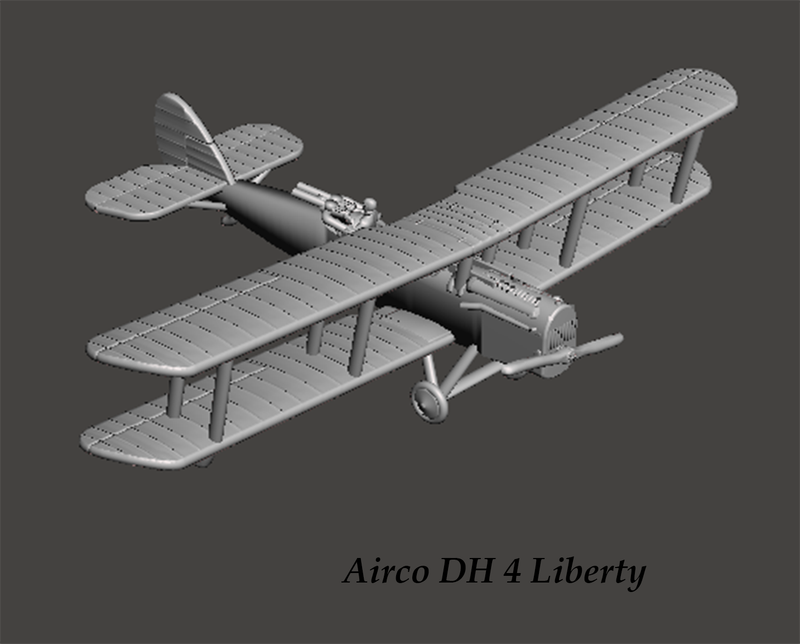
Airco DH.4 Liberty
The American-built DH.4 paired Geoffrey de Havilland's proven design with the powerful American Liberty L-12 engine. Produced in large numbers in the United States, it became the only American-built aircraft to see combat with U.S. forces in France during the First World War. Used for bombing, reconnaissance, and observation, the Liberty-powered DH.4 remained in American service long after the Armistice and became an important foundation for U.S. military aviation in the postwar years.
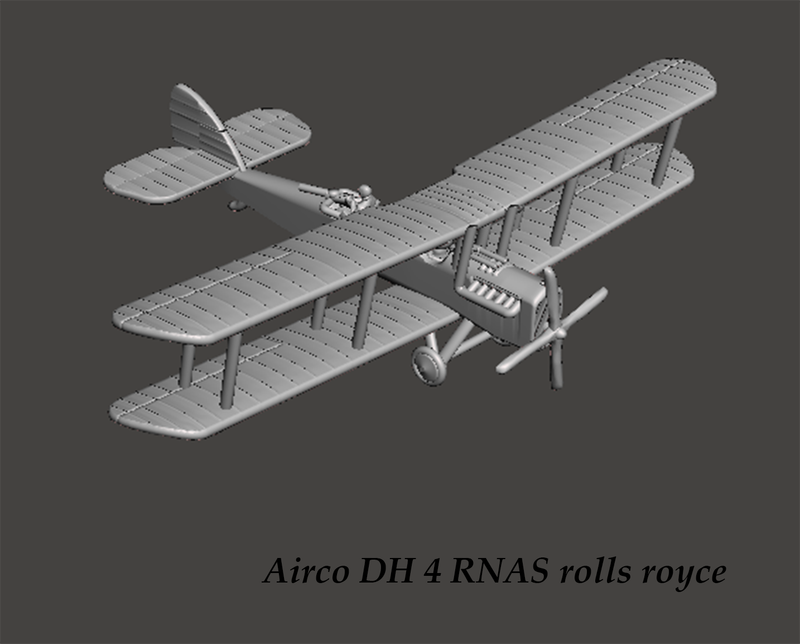
Airco DH.4 Rolls-Royce and Rolls-Royce RNAS
Powered by the Rolls-Royce Eagle engine, the DH.4 combined excellent speed, range, and altitude performance with the versatility needed for bombing and reconnaissance missions. The Eagle-powered aircraft became one of the best-known British versions of the DH.4 and served extensively on the Western Front. Its performance made the DH.4 difficult for enemy fighters to intercept and helped establish the design as one of the outstanding two-seat aircraft of the First World War. The Royal Naval Air Service operated Rolls-Royce Eagle-powered DH.4s on long-range bombing, reconnaissance, and anti-submarine patrols. Their speed, range, and useful bomb load made them particularly valuable for operations against German naval facilities and other targets along the Belgian coast. RNAS service demonstrated the versatility of the DH.4 beyond the Western Front battlefield and helped establish it as an effective naval as well as land-based aircraft.
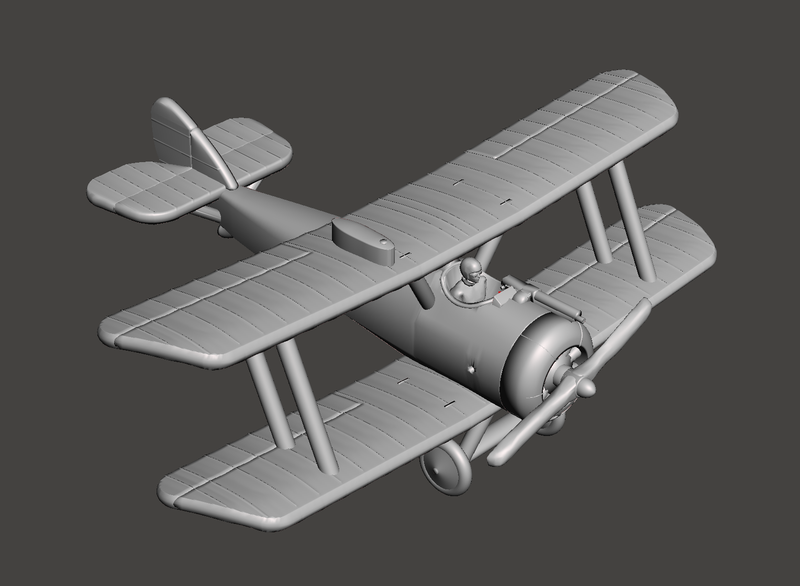
Airco DH.5
Introduced in 1917, the Airco DH.5 was an unusual single-seat fighter designed by Geoffrey de Havilland. Its distinctive backward-staggered wings were intended to improve the pilot’s forward and upward view while retaining a conventional tractor engine and propeller. Although its performance was soon surpassed by newer fighters, the DH.5 proved useful in the ground-attack role, providing low-level support to British and Australian troops during some of the hardest fighting of 1917.
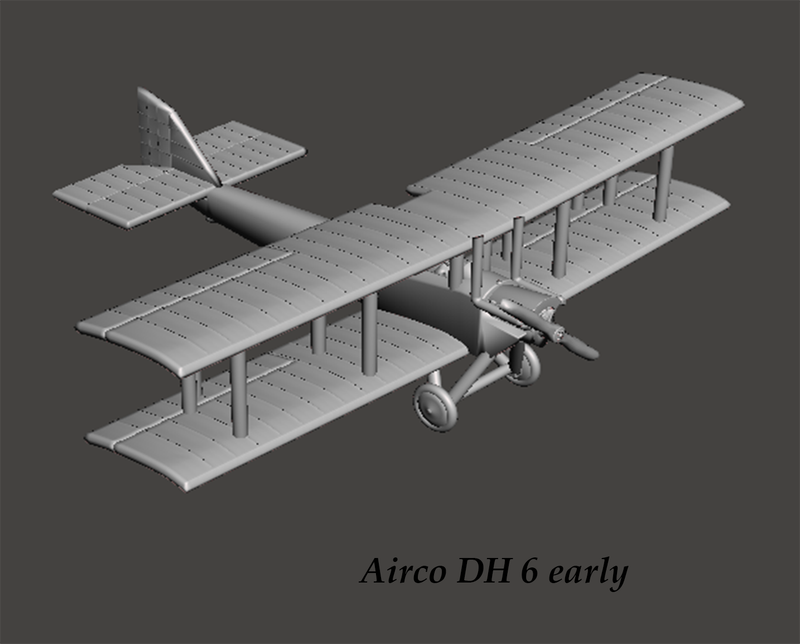
Airco DH.6 Early and Late
Introduced in 1917, the Airco DH.6 was designed by Geoffrey de Havilland as a simple, forgiving trainer for pilots entering the rapidly expanding Royal Flying Corps. The early DH.6 featured the distinctive angular lines and straightforward construction that earned it the nickname “Clutching Hand.” Stability and ease of handling were valued over performance, making the aircraft well suited to the demanding task of preparing new pilots for operational service. Later DH.6s incorporated production changes intended to simplify construction and meet the enormous demand for training aircraft. As newer trainers became available, many DH.6s found additional work away from flying schools, particularly on coastal patrol and anti-submarine duties. Slow but dependable, the DH.6 remained useful throughout the war and continued serving in military and civilian roles after the Armistice.
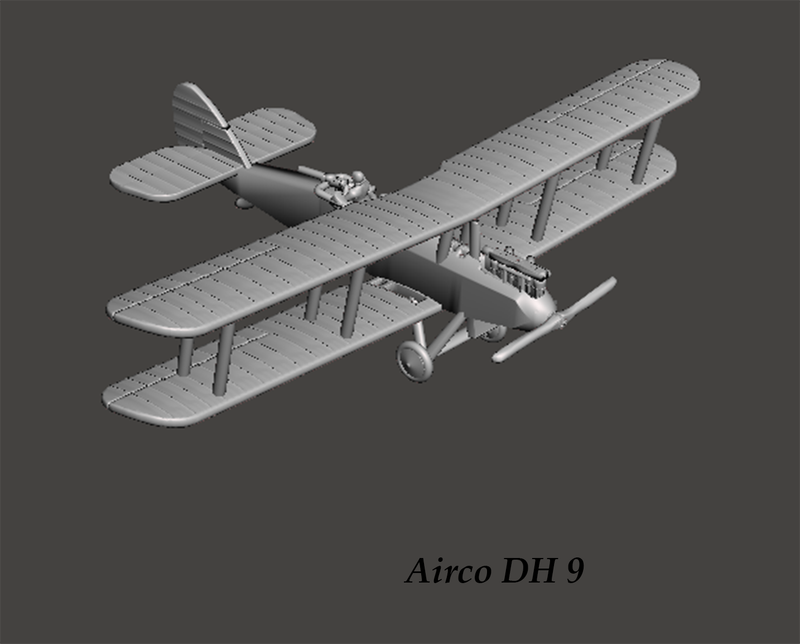
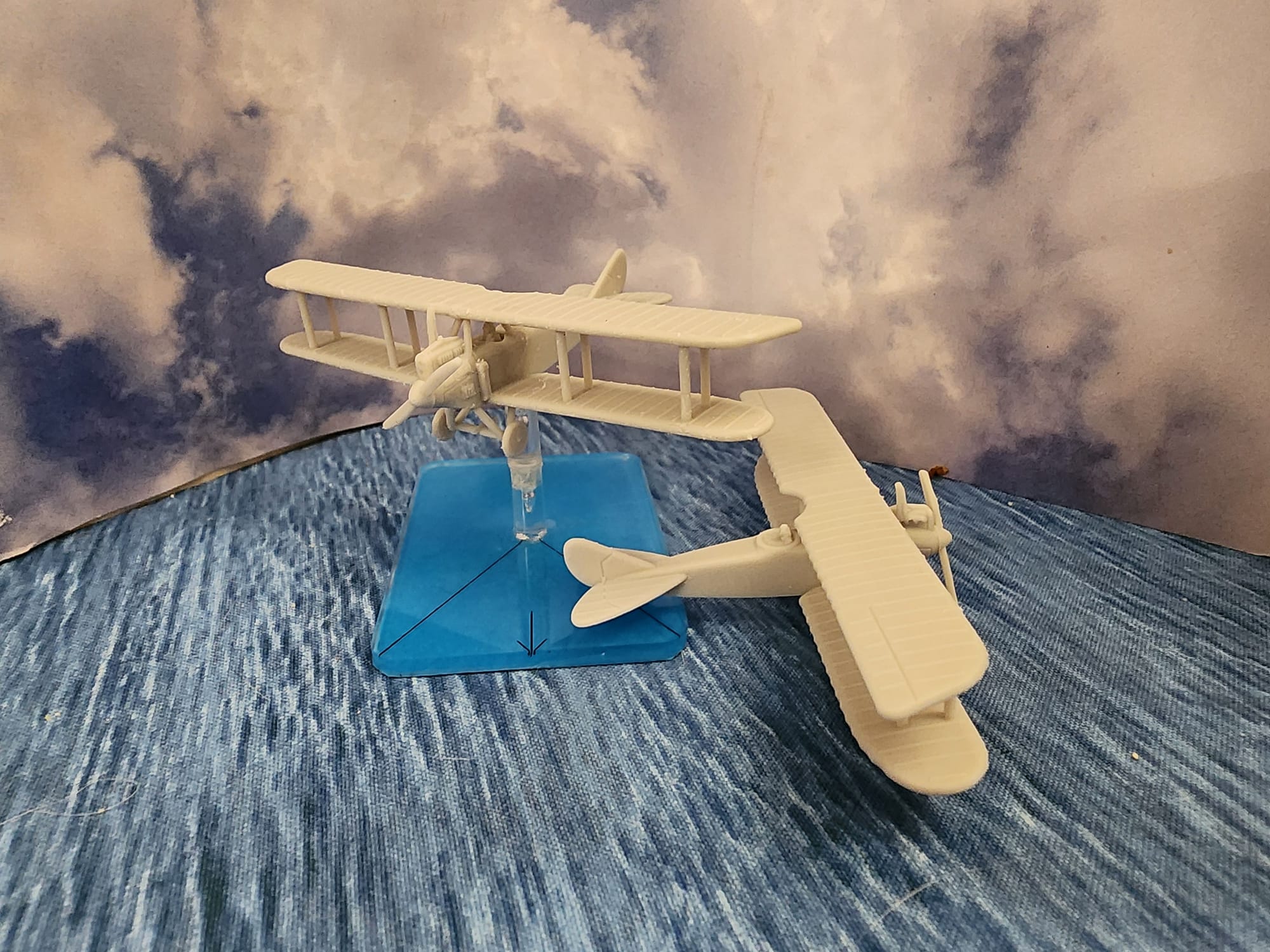
Airco DH.9
Introduced in 1918, the Airco DH.9 was developed from the successful DH.4 as a two-seat day bomber and reconnaissance aircraft. Although intended as an improvement, its Siddeley Puma engine failed to deliver the expected performance, leaving the DH.9 slower and more vulnerable than its predecessor. Despite these shortcomings, large numbers served on the Western Front and in other theaters, making the DH.9 an important Allied aircraft and leading directly to the much more successful Liberty-powered DH.9A.
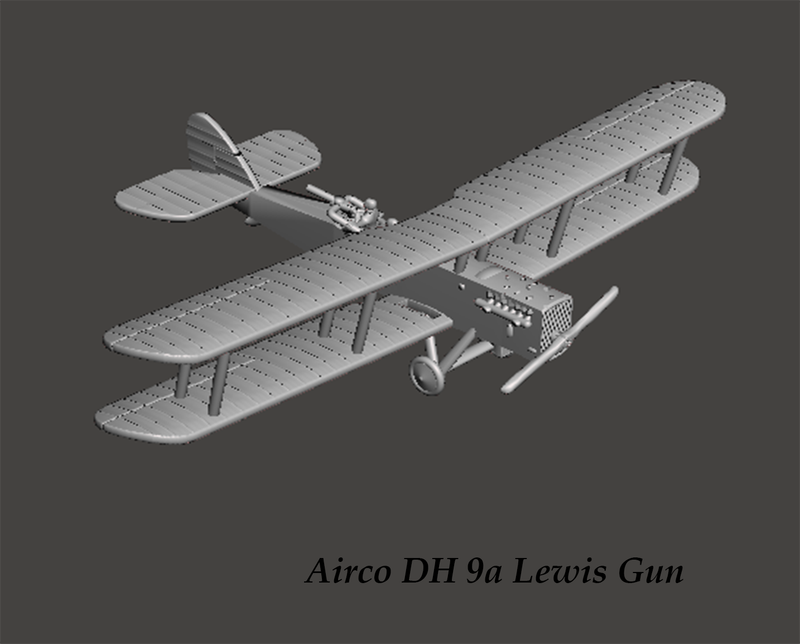
Airco DH.9a One Lewis Gun and Twin Lewis Guns
The Airco DH.9A was developed to overcome the disappointing performance of the earlier DH.9 by combining an improved airframe with the powerful American Liberty engine. Entering service in 1918, the “Ninak” proved to be a capable day bomber with improved speed, range, and reliability. This version carries the observer’s single flexible Lewis gun, providing rear defense while the aircraft carried out bombing and reconnaissance missions over enemy territory. As the threat from enemy fighters increased, some DH.9As carried a twin Lewis gun mounting for the observer, greatly increasing their defensive firepower. The powerful Liberty engine and improved performance made the “Ninak” one of Britain’s most capable late-war day bombers. Although it arrived too late to have a major impact on the First World War, the DH.9A enjoyed a long postwar career with the Royal Air Force, particularly in operations across the Middle East.
Fresh off the Production Line and Cleared for Duty!
Quartermaster's Store
Quartermaster's Friends
Tales from Thursdays Past
The Briefing Room
It was rough flying at first. But like any good ground crew, we kept working, upgrading our hardware, refining our procedures, and expanding our capabilities until we had something worth being proud of.
Then in June 2024 came a second blow. Shapeways, long one of the most trusted suppliers of 3D printed aircraft to the wargaming community, closed its doors, leaving pilots everywhere grounded and without machines. Tabletop Flights didn't hesitate. We opened the Quartermaster's Store, rolled up our sleeves, and set about filling that gap, one aircraft at a time. New types have been entering service ever since.
Our standing orders haven't changed since day one: bring people together, keep the hobby airborne, and make sure no pilot has to fly alone. Whether you're a seasoned ace or climbing into the cockpit for the first time, there's always a place for you at this aerodrome.
Wheels up. Let's fly!

The Hangar

The Control Tower
- Salisbury, Maryland, United States